Shuri Castle
Author: Richard Perkins
Photos/Videos Taken: 2027/07/13
Address: 1-2 Shurikinjocho, Naha,
Okinawa 903-0815
Admission Fee: Adult ¥400・(group) ¥320 |
High School Student ¥300・(group) ¥240 |
Elementary/Middle School Student
¥160・(group) ¥120 | Anyone Under 6 years old free
Castles can be found throughout Japan. Some are reconstructed replicas, while others retain their original structures. At certain sites, the castles themselves no longer exist, leaving only the grounds behind. Many of these castles have become popular tourist destinations, attracting large crowds each day. One notable example is 首里城 (shurijō) or Shuri Castle in Okinawa Prefecture. For first-time visitors to the prefecture, it’s a must-see destination for experiencing the region’s unique culture and history.
It’s unclear exactly when Shuri Castle was built, but it’s believed to have been constructed in the latter half of the 14th century. Believe it or not, the castle has burned down five times, meaning the current structure is a reconstruction. The first fire occurred during a civil war in 1453. Additional accidental fires occurred in 1660 and 1709. The castle was destroyed once again during World War II, and most recently, it was consumed by fire on October 31, 2019.
Shuri Castle is said to have been built by Shō Hashi, the first ruler to unify the Ryūkyū Kingdom (modern-day Okinawa Prefecture). Often referred to as a グスク (gusuku), it served as the political center of the prefecture and the residence of the king. For approximately 450 years, it functioned not only as the royal palace but also as the seat of the Shuri Royal Government. The castle also played an important role as the site of major religious ceremonies and rituals. Shuri Castle is a symbolic structure that fulfilled many significant roles in Okinawa Prefecture, including political, cultural, and spiritual. It stands as one of the most distinctive castles in Japan.
Those who've visited before may have noticed that the castle is entirely red. However, it wasn’t always this color. Excavations showed that Shuri Castle was initially brown. The color change occurred in 1715 during yet another reconstruction of the castle. This was caused by a growing population in the prefecture, leading to a shortage of firewood. Producing brown-colored roof tiles required firing them at higher temperatures. However, with the increasing population, firewood was limited, so the tiles could only be fired at lower temperatures, resulting in the castle’s present red color.
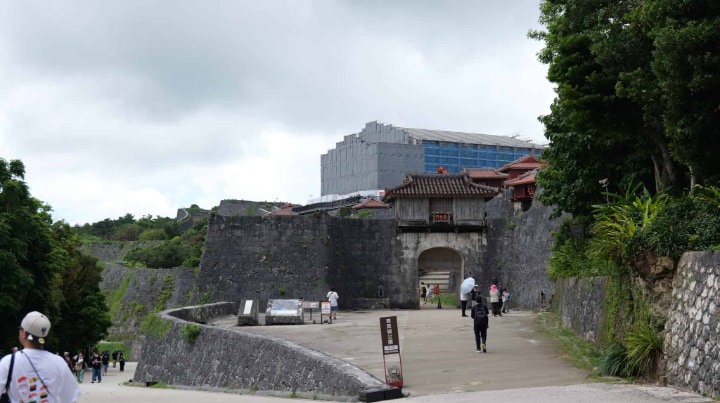
One of the most unusual features of Shuri Castle is its castle walls. Unlike the straight walls commonly seen at castles in Japan, the walls here curve inward and outward. They were designed to follow the natural, wave-like shape of the land, allowing those in the castle to spot enemies approaching from the sides during an attack. These walls were highly effective at protecting those inside and slowing enemy advances. The curved design is also believed to reflect the unique sense of beauty of the Ryūkyū Kingdom, although this hasn’t been definitively confirmed. This distinctive shape gives Shuri Castle an appearance and atmosphere unlike that of any other castle in Japan.
In December 2000, Shuri Castle was designated a World Heritage Site as part of the "Gusuku Sites and Related Properties of the Kingdom of Ryūkyū”. It’s the only castle in Okinawa Prefecture recognized as a World Heritage Site, and the only castle in Japan that’s part of this type of World Heritage. Not only is it the largest wooden structure in Okinawa Prefecture, but its architecture is also unique, incorporating elements from both China and Japan. Furthermore, buildings like this are rare not only in Japan but throughout Asia. The castle truly represents the unique culture of Okinawa Prefecture. Another remarkable feature of Shuri Castle is its design. The main hall is a two-tiered, three-story structure. Although it appears to have only two stories from the outside, there are actually three floors inside. In front of the building lies the 御庭 (una), an open courtyard where various ceremonies were held. Shuri Castle’s strong influence on Okinawa Prefecture’s unique culture is evident; it’s easy to see how important this culture and religion are to the people here.
Usually, castles in Japan were home to 大名 (daimyō—feudal lords). However, as mentioned earlier, Shuri Castle was the residence of the royal family. The castle functioned as a center for both political affairs and religious ceremonies. Because of this, it fulfilled many different roles, making it a far more multifaceted place than most Japanese castles. Its unique design immediately sets it apart from others across the country. Shuri Castle is truly special, inviting visitors to return again and again while telling the rich history of Okinawa Prefecture. As a source of pride for the region, it remains a must-visit destination—especially for those visiting this prefecture for the first time—where visitors will want to take their time exploring the grounds and learning about the history of the former Kingdom of Ryūkyū.
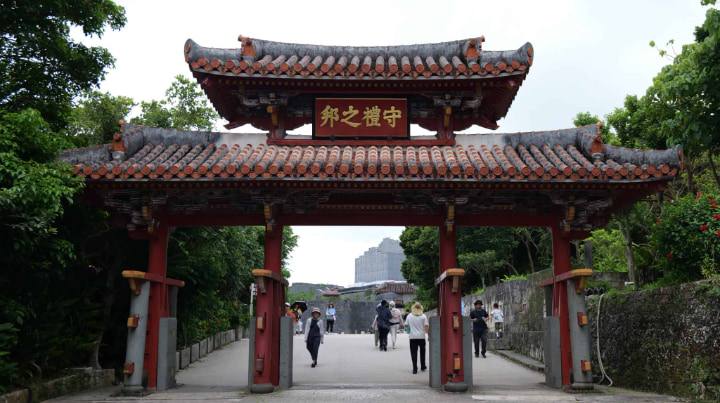
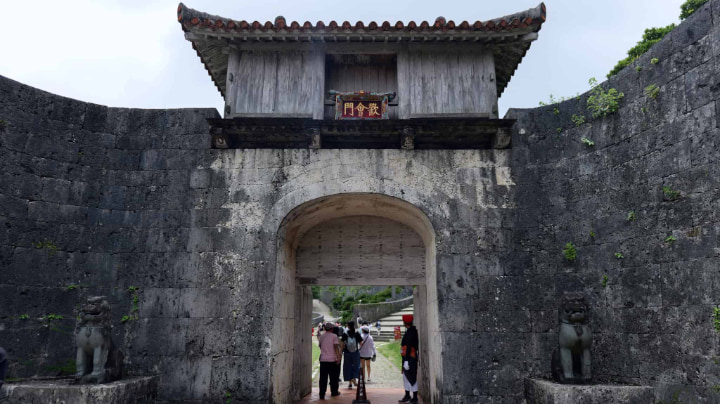
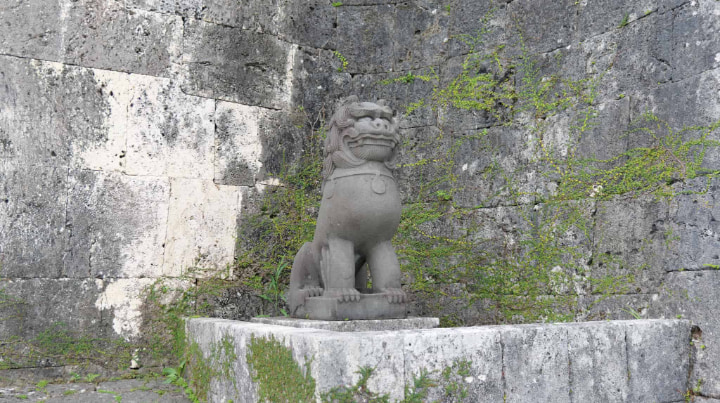
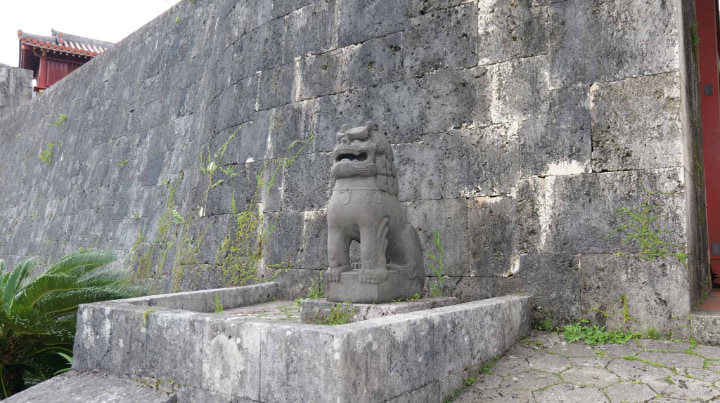
These two stone statues are also シーサー (shīsā), guardian deities of Okinawa Prefecture.
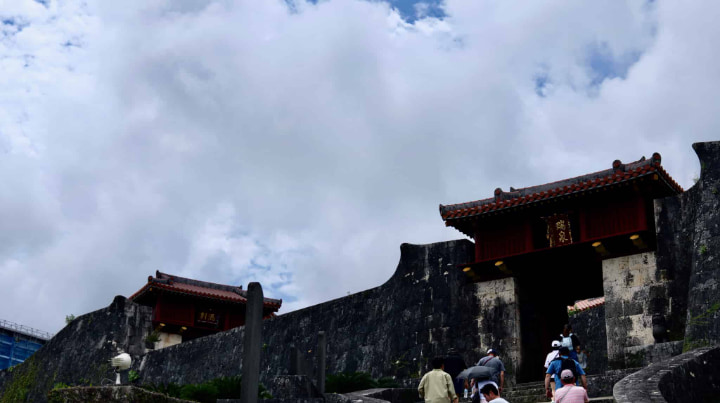
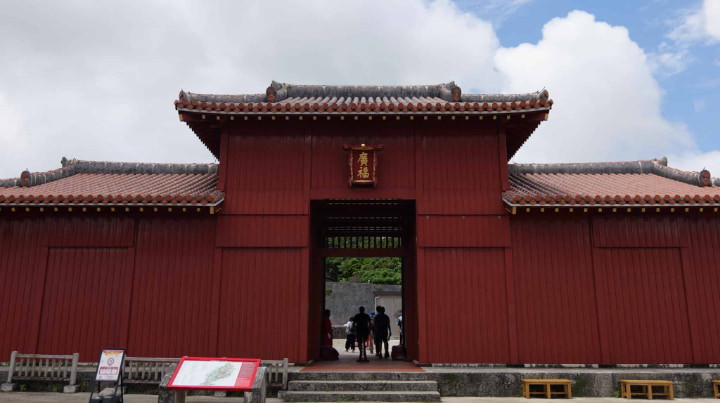
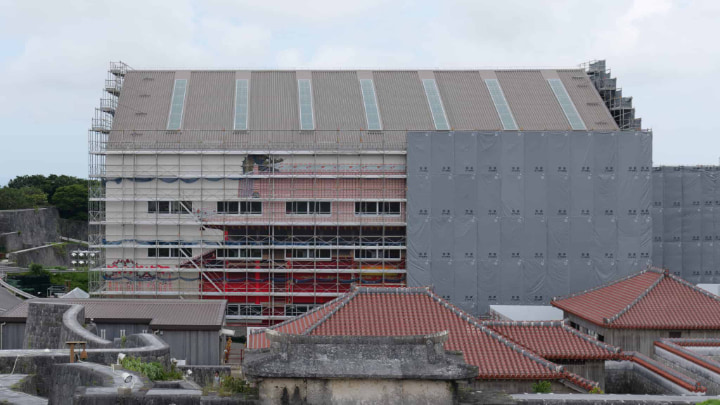
When MORIKOBOSHI visited Shuri Castle, it was unfortunately under reconstruction following the fire that occurred on October 31, 2019.