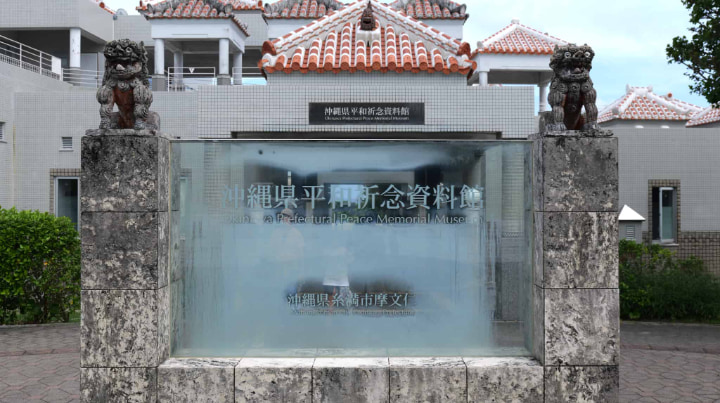
Okinawa Prefectural Peace Memorial Museum
Author: Richard Perkins
Photos/Videos Taken: 2025/07/13
Address: 614-1 Mabuni, Itoman,
Okinawa 901-0333
Admission Fee: Adult ¥300・(group) ¥240 |
Elementary・Middle・
High School Student/Anyone Under 18
¥150・(group) ¥100
One area of Japan is often described as a tropical paradise: Okinawa Prefecture. With its year-round warm climate and mild winters, Okinawa Prefecture attracts many. However, this region has a unique and complex history. It once had its own distinct culture and was even an independent nation. Originally known as the Ryūkyū Kingdom, it was formally incorporated into Japan in 1879. In 1945, during World War II, Okinawa Prefecture was occupied by American forces and separated from the rest of Japan. The United States turned the islands into a strategic military base as part of its planned invasion of mainland Japan. During the ensuing Battle of Okinawa, countless islanders—including civilians who took no part in the fighting—were caught up in the devastation. The battle became one of the deadliest conflicts fought on Japanese soil.
People view war in different ways, but most may agree that it’s terrifying and destructive. Even so, understanding the Battle of Okinawa is essential to grasping the history and identity of Okinawa Prefecture. At the Okinawa Prefectural Peace Memorial Museum, visitors can learn (in detail) about the background of this battle and its lasting impact on the region. As the United States prepared for an invasion of mainland Japan, establishing a military foothold in Okinawa Prefecture became a critical objective. The battle unfolded across the main island of Okinawa Prefecture and surrounding areas. The human cost of this battle was enormous. Not only did soldiers lose their lives, but as mentioned, many residents were also caught up in the chaos. Although no official survey was ever conducted, it’s estimated that around 94,000 Okinawan civilians died during the fighting.
Photos and videos are prohibited (from being taken) inside this museum. However, the interior features a wide range of photographs, films, maps, and exhibits that vividly document the events of the Battle of Okinawa. Visitors first learn about the history of Okinawa Prefecture and the circumstances leading up to the war, gaining a sense of what life on the islands was like before the conflict. The exhibits then move into the war itself. Some rooms contain scale models that help visitors visualize the extent of the destruction and the brutal consequences of combat. Others depict shops and facilities established by American forces, making it easier to imagine everyday life for soldiers stationed on the islands. One section presents numerous testimonies from residents, offering deeply personal insights into what islanders experienced each day during the war.
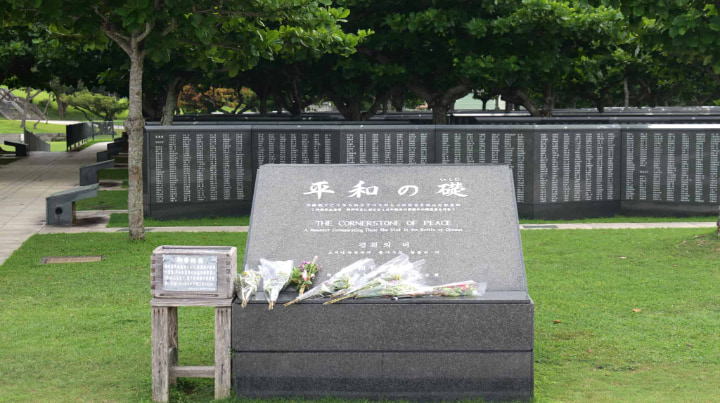
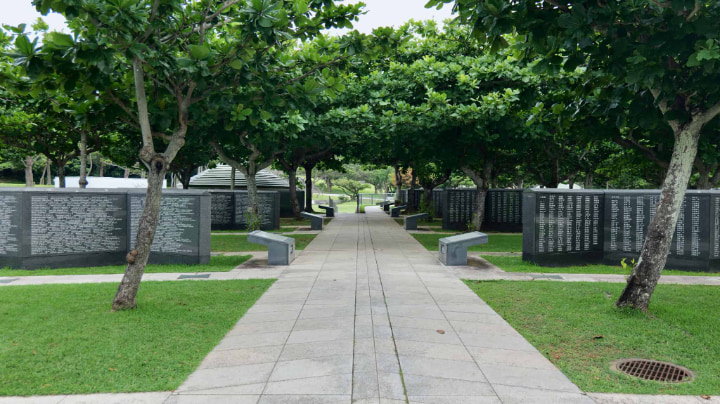
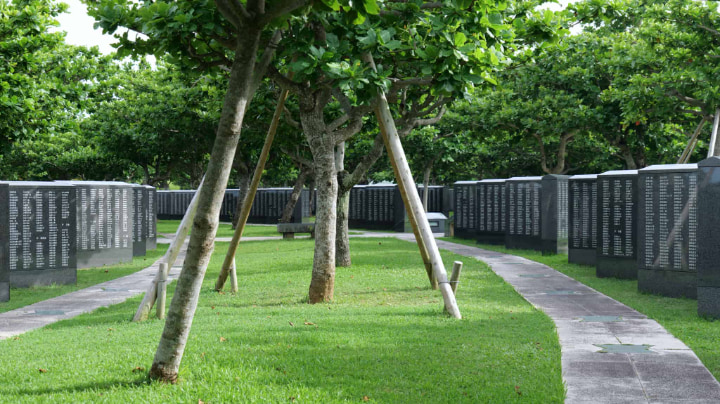
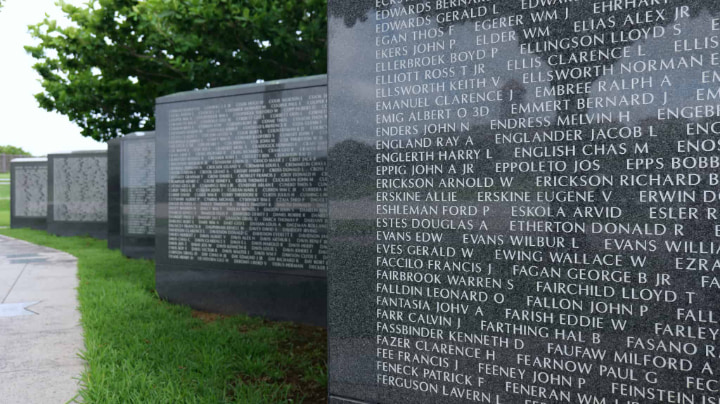
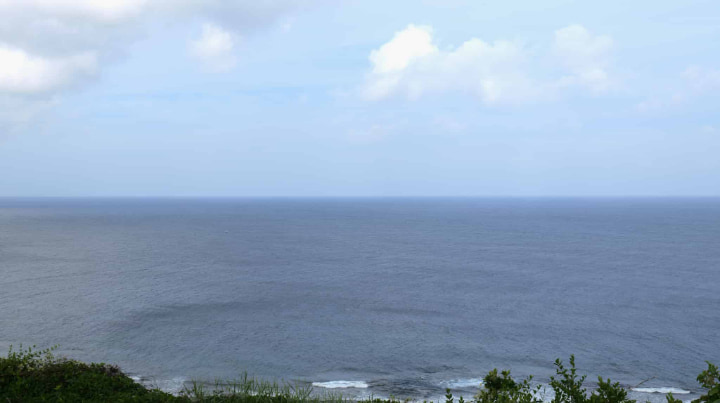
Without a doubt, the most unforgettable part of this museum is the “Cornerstone of Peace”. This monument bears the names of all who lost their lives in the Battle of Okinawa—not only residents, but also American soldiers and people of other nationalities. Regardless of rank or nationality, everyone who perished in the conflict is remembered here. The monument was unveiled on June 23, 1995. This marked the 50th anniversary of the end of the battle. Standing before it can be overwhelming. The engraved names seem to stretch endlessly into the distance, powerfully conveying the scale of the tragedy. Beyond the memorial lies the vast Pacific Ocean, its deep blue horizon extending as far as the eye can see. It’s a solemn place to visit, yet it also highlights the striking natural beauty of Okinawa Prefecture.
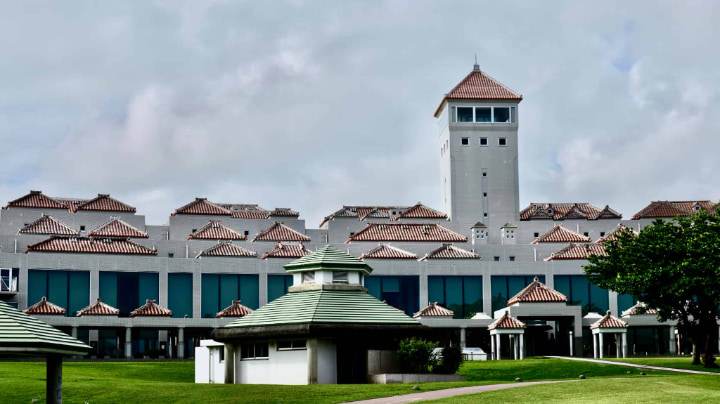
Although the museum itself is not especially large, it’s well worth visiting for anyone interested in the history of Okinawa Prefecture. Without confronting this history, it can be difficult to understand the extent of war. The museum provides a clear introduction to a pivotal event that (deeply) affected Japan as a whole. The exhibits are thoughtfully designed, and it’s easy to understand what Okinawa Prefecture experienced during this period. Understanding these tragic events is important not only for learning about this island but also for gaining a deeper understanding of Japan itself. When next in Okinawa Prefecture, be sure to stop by this museum and learn more about the history of these beautiful islands and the importance of peace.