Sawanotsuru Museum|Traditional Rice Wine Brewing
Sawanotsuru Museum— Traditional Rice Wine Brewing —
Author: Richard Perkins
Photos/Videos Taken: 2025/08/24・2026/03/19
Address: 1-1-1 Oishi Minamimachi, Nada-ku,
Kobe, Hyogo 657-0852
In Japan, one will find 日本酒 (nihonshu). Often referred to as “rice wine”, this traditional Japanese alcohol is made from rice. In the Jomon Period (13,000 BC - 4th century BC), there’s evidence of (some form of) rice-based alcohol production in Japan. This suggests that Japan has a long history of making rice-based alcohol. Over the centuries, several areas in Japan have become well known for their rice wine production. One of them is Hyogo Prefecture. Specifically, the Nada ward in Kobe, Hyogo Prefecture, is known for its long history of rice wine production. Several rice wine breweries are in this ward. One of them is 沢の鶴 (sawa-no-tsuru).
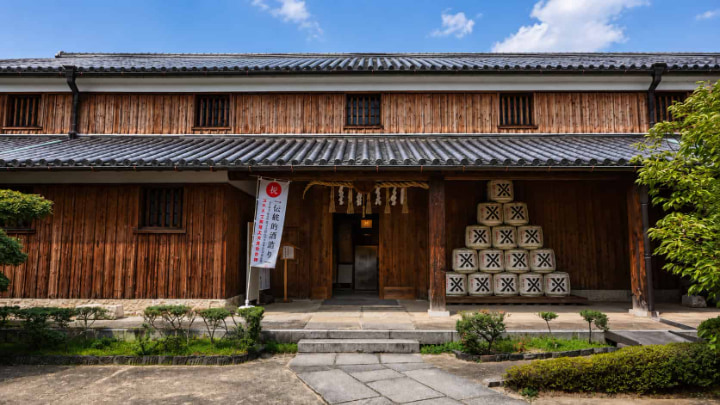
Sawanotsuru now produces its rice wine at a different brewery. However, the original brewery has been renovated into a museum that anyone can visit. This is the Sawanotsuru Museum. This museum first opened in November 1978. Without a doubt, the museum’s most remarkable feature is the building itself. It’s a traditional wooden brewery built in the Edo Period (1603-1868). With over 170 years of history, the building was constructed using a traditional woodworking technique known as 指物 (sashi-mono). The frame uses no nails; instead, the wooden components join like pieces of a puzzle.
On January 17, 1995, the Great Hanshin-Awaji Earthquake struck Hyogo Prefecture, and the brewery collapsed. Additional parts were added during reconstruction. These parts help the building withstand earthquakes and strengthen it overall. The Sawanotsuru Museum reopened in the spring of 1999.
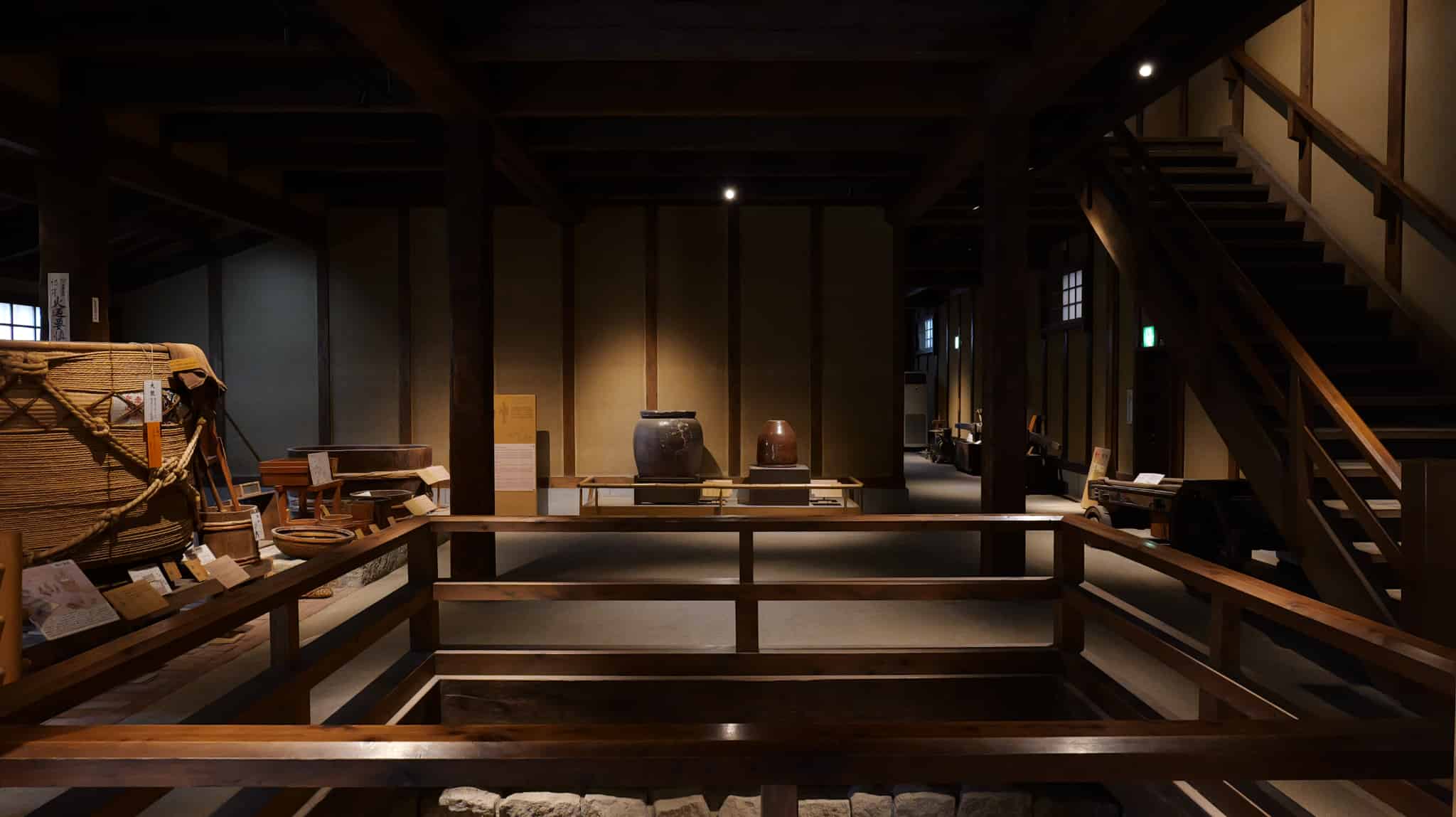
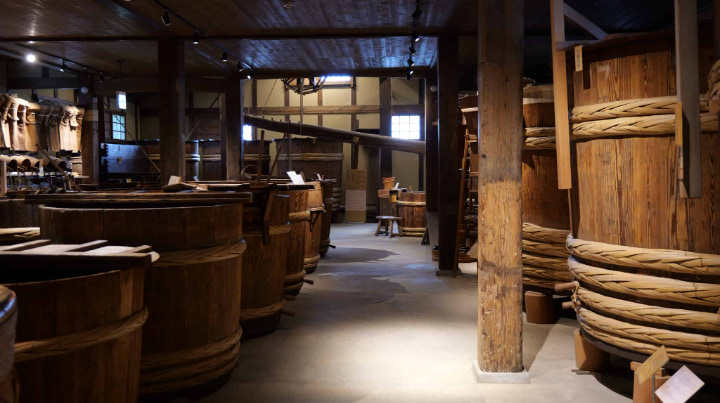
At this museum, one can see how rice wine is made. One can experience the history of making rice wine up close. One may notice that traditional Japanese buildings have few windows. Very little natural light enters from outside. While exploring this brewery, one can imagine the brewers making rice wine in a dark (and difficult to see) environment. With more and more traditional Japanese buildings being demolished each year, stepping inside a traditional rice wine brewery and seeing it up close is a special experience. Here, one can experience the culture and history of traditional rice wine production while enjoying the building itself.
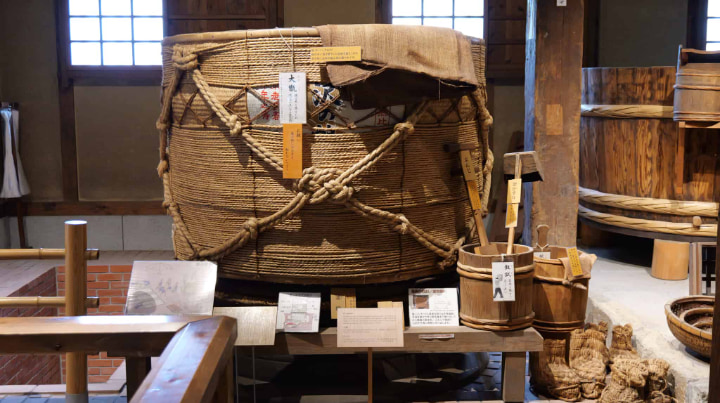
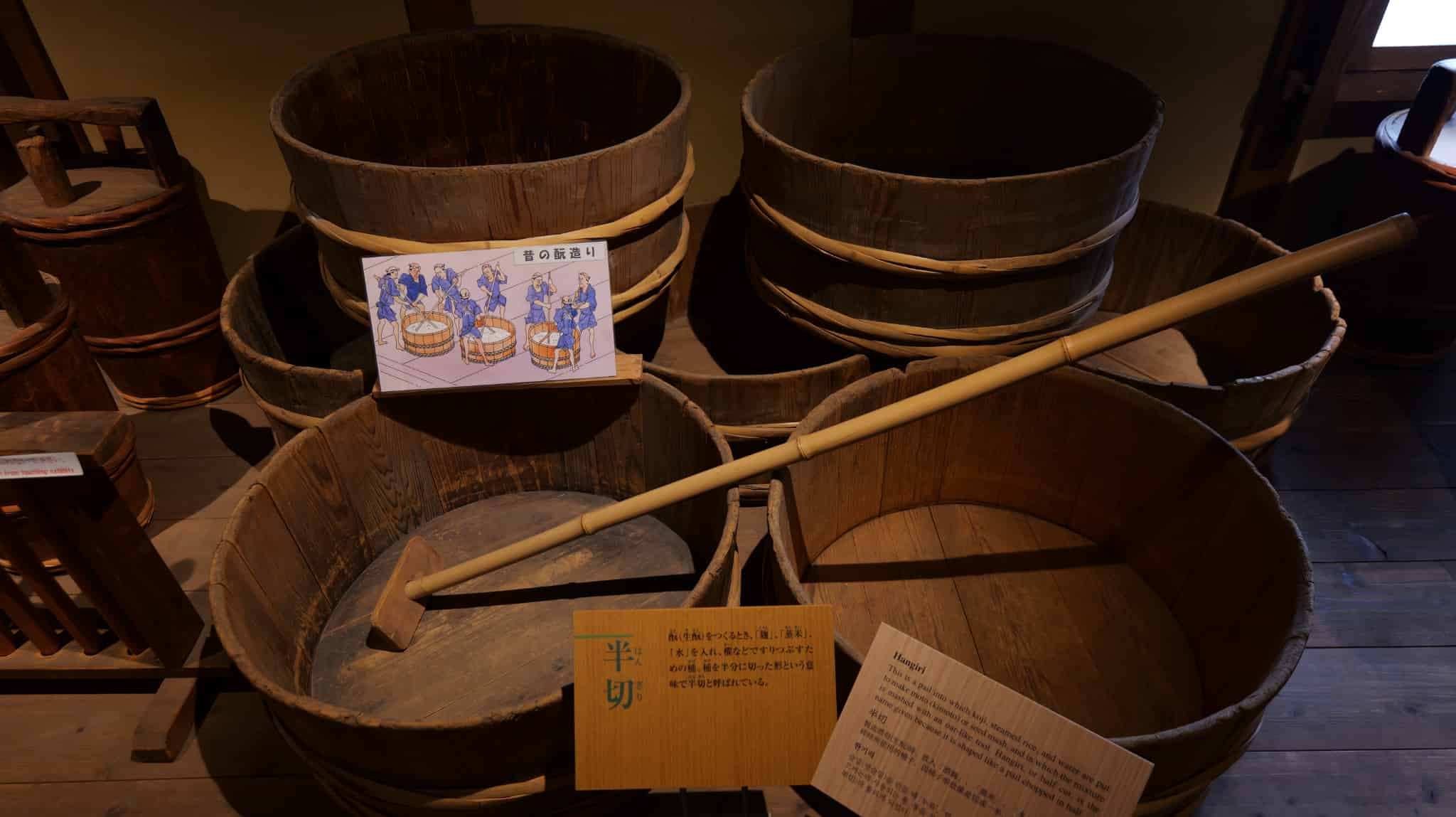
At the Sawanotsuru Museum, visitors can learn how Sawanotsuru used to make its rice wine. Along with replicas, many wooden barrels (and other items) once used to make rice wine are displayed. In the first room, visitors can watch a short video about Sawanotsuru. From there, they can see several wooden barrels and learn about the first step in rice wine production. During this step, 酒米 (sakamai—rice grown specifically for rice wine) is steamed before being used in the fermentation process. From there, visitors move on to the next room at the far end of the first floor. Here, they can see even more barrels, including some that are larger than those in the previous room. Visitors may be surprised at the amount; there are quite a lot. Here, 麹 (kōji—a type of mold used in the fermentation process) is mixed with 蒸米 (mushi-mai—steamed rice) and water in three stages. This helps create a liquid known as 醪 (moromi), another essential ingredient in making rice wine.
From here, one will make their way to the second floor. On this floor, items used in making rice wine are on display. Here, one will find items ranging from those essential to rice wine production to the 徳利 (tokkuri), a bottle used to store rice wine. There’s also a model boat. This boat helps explain how rice wine was once transported across the country. Other items on display include rice wine bottle labels and various advertisements that Sawanotsuru used in the past. All of these exhibits give visitors a sense of how long and fascinating the history of rice wine production is, and they’ll even leave one with a hankering to try some. It really is all very interesting.
At the far end of the second floor, one will find the 麹室 (kōji-muro). This room is where 麹 (kōji), a type of mold, is sprinkled over steamed rice. This process turns the starch in the rice into glucose, converting it into sugar, thus fermenting the rice and producing alcohol. To help create the right conditions for making kōji, this room is kept at approximately 35°C. It may seem difficult for the brewers to work in such a warm room. However, traditionally, rice wine was produced from autumn through spring. As a result, some may have actually enjoyed working in such a warm room on cold days.
Lastly, visitors will make their way back to the first floor and through the gift shop. Here, they can buy Sawanotsuru rice wine and even try a small sample. Trying this rice wine after learning about how it’s made definitely makes it taste even better. It may also leave visitors wanting to learn more about rice wine in general. With only two floors, this isn’t a very large museum, but the Sawanotsuru Museum has plenty to see and makes rice wine production easy to understand. As mentioned earlier, this is one of many traditional Japanese buildings that are being demolished each year. Seeing one up close is a truly special experience. It’s worth visiting to see the building itself. If one is in Hyogo Prefecture, be sure to visit the city of Kobe and learn about rice wine at the Sawanotsuru Museum.
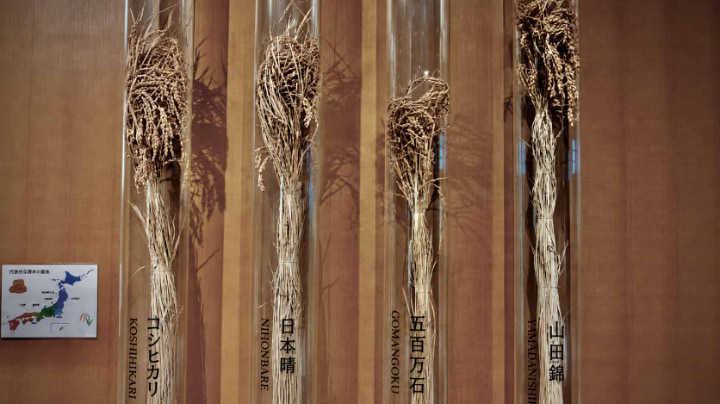
This is some of the saka-mai that’s used to make rice wine.
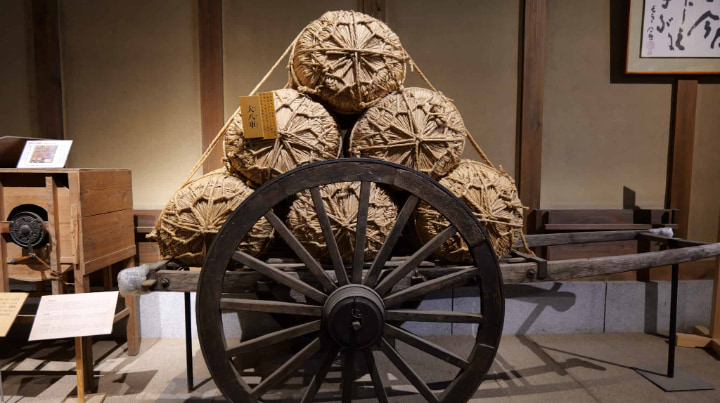
This is how rice used to be transported.
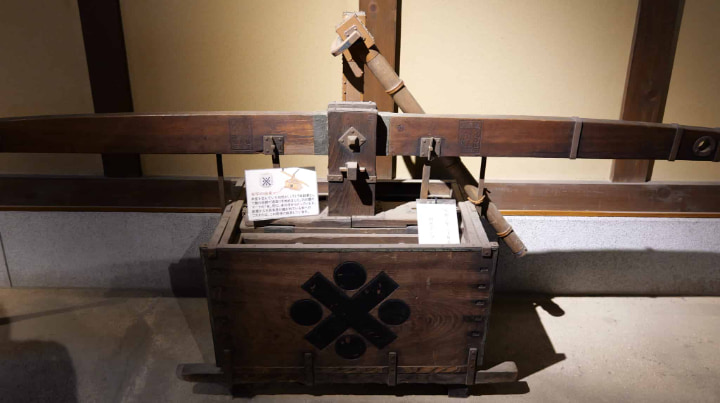
This is what’s called a 竜吐水 (ryūdosui). It was a type of pump that was used during the Edo Period (1603-1868) to help put out fires.
1/2