Temples and Shrines
In Japan, there are more Shintō shrines and Buddhist temples than one can count. It’s often said that the combined number of them exceeds the total number of convenience stores in the country. Some Shintō shrines and Buddhist temples are relatively new, while others have a long history. Many of them are so well known that people travel from all over the country to visit them. Regardless of their scale, visiting Shintō shrines and Buddhist temples allows people not only to learn about religion in Japan but also to gain insight into the values and ways of thinking of the Japanese. It wouldn’t be an understatement to say that these religious sites (for lack of a better phrase) are among the best places to gain a deeper understanding of Japan and the Japanese people themselves.
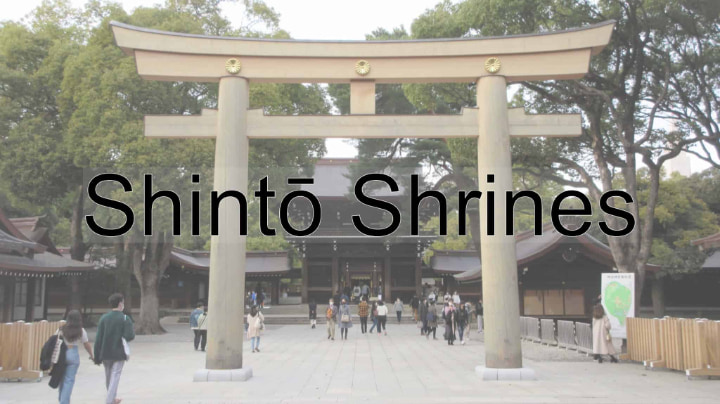
Shrines in Japan, as mentioned above, are built as part of the Shintō religion. In Shintō, it's believed that countless gods and goddesses exist throughout the country. This is a religion that’s unique to Japan. Known in Japanese as 八百万の神 (yaoyorozu-no-kami), and literally translated as “eight million gods”, there are believed to be countless gods and goddesses across the country. Because of this, the Japanese worship a seemingly limitless number of gods and goddesses, and shrines dedicated to many different deities can be found across Japan. Depending on the shrine, the way people pray and worship may also differ. Some of the most well-known gods and goddesses in Japan include the Sun Goddess—天照大神 (amaterasu-ōmikami)—and the Goddess of Grains, 稲荷神 (inari-no-kami). Shintō shrines can be found throughout Japan, and some have even become famous tourist destinations. Despite this, many Japanese visit them regularly. Shrines are also places where people celebrate important milestones in life, such as the birth of a child or a wedding. Even in modern-day Japan, Shintō shrines continue to play an important role in Japanese society, and it’s easy to see the close connection between Shintō religion and the Japanese people.
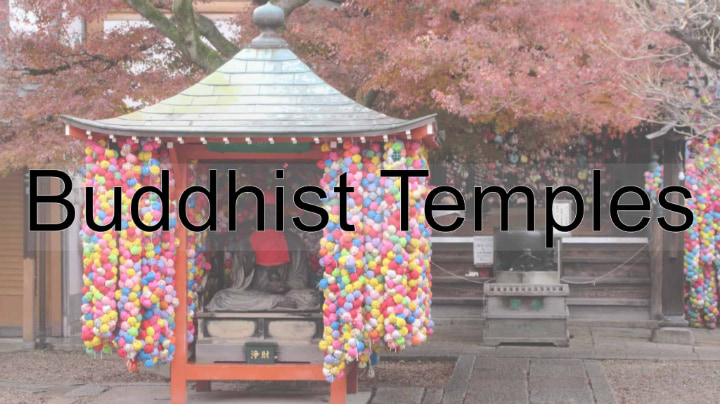
On the other hand, Buddhism didn’t originate in Japan. It originated in India and spread through China before eventually reaching Japan. More specifically, Buddhism was introduced to Japan during the Asuka period (592–710). In Buddhism, people pray, and religious ceremonies are held in buildings known as temples. Unlike in the Shintō religion, gods and goddesses are not worshipped. Rather, Buddha—an enlightened being—and (what is known as) the Bodhisattva—someone who’s reached enlightenment and assists others—are worshiped. Many deities formed from (and related to) these two can be found at various temples across Japan. That said, Buddhism does share some similarities with Shintō. For example, depending on the deity or figure being worshipped, the structure and appearance of a temple may differ. The way people pray may also vary from temple to temple. In addition, the beliefs (and so on) in Buddhism in Japan are slightly different from those in Buddhism in other countries. The teachings of Buddhism are interpreted differently by the Japanese. They’re interpreted in a way that fits Japanese culture and the mindset of the Japanese. As a result, Japanese Buddhism has developed unique customs and practices that are not commonly seen in other Buddhist countries.
There’s a custom in Japan known as 初詣 (hatsumōde). This is when people visit a Shintō shrine or Buddhist temple at the beginning of the new year to pray for a safe and peaceful year ahead. It’s often said that, for many Japanese people, this is the only time of year when they visit a shrine or temple. However, some shrines and temples become so crowded during this time of year that it feels as though the entire country has gathered there to pray. As mentioned above, many Japanese visit shrines regularly. Many also visit temples regularly. From this, and from the custom of hatsumōde, one can easily see how deeply rooted religious faith is in Japanese society. One can also understand the important role that Shintō shrines and Buddhist temples continue to play in Japan.
Shintō shrines and Buddhist temples are not just places where people go to pray. As mentioned above, many religious events and ceremonies also take place there. It might not be the same type of event, but festivals (a traditional event) also take place at shrines and temples. During these festivals, participants take part in a variety of activities while offering thanks to gods, goddesses, and other deities. Festivals range from small local events to large-scale celebrations. Some of the more popular festivals attract huge crowds from across Japan (and even those from abroad, too). However, many festivals originally began as local events centered around the communities where the shrines or temples were located. Participants thank deities differently depending on the festival itself. Some famous festivals in Japan include the Kanda Festival in Tokyo and the Gion Festival in Kyoto Prefecture. Festivals are held throughout the year in Japan, although many take place during the summer. Many Japanese look forward to (watching or participating in) these festivals.
The articles below introduce some of the most interesting Shintō shrines and Buddhist temples in Japan, including historically significant sites as well as places that we at MORIKOBOSHI highly recommend visiting. Through these articles, readers can gain a deeper understanding of Japan’s shrines and temples. By visiting (and praying at) shrines and temples, one can learn in depth about the traditional aspects of Japan. We hope these articles will help readers appreciate and experience the significance of these important religious sites.